Today’s dental practices face a difficult challenge: balancing patient access, rising overhead costs, staffing shortages, and team well-being.
The solution isn’t simply working harder—it’s creating smarter systems. Combining block scheduling for the doctor with an assisted hygiene model can improve efficiency, enhance the patient experience, and reduce burnout throughout the practice.
Block Scheduling Creates Better Flow
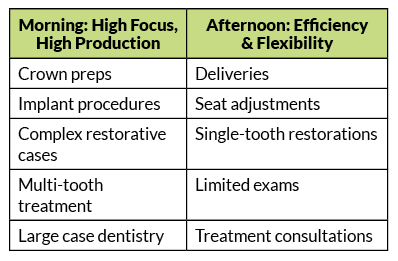
Rather than filling the doctor’s day with a random mix of procedures, block scheduling organizes appointments based on the provider’s energy, focus, and clinical demands.
Reserve mornings for procedures requiring greater concentration and longer appointment times, and schedule lighter procedures later in the day. This approach creates a calmer workflow, reduces delays, and helps prevent fatigue from constantly switching between complex and simple procedures throughout the day.
Assisted Hygiene Expands Capacity
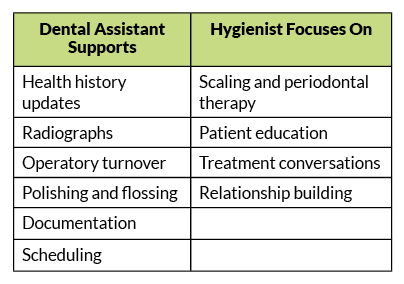
Many practices struggle with hygiene schedules booked months in advance. Long waits frustrate patients and reduce opportunities to diagnose treatment needs. Assisted hygiene helps by pairing a hygienist with a dedicated dental assistant.
The result is greater patient access, improved efficiency, and better utilization of the clinical team while maintaining a high standard of care. In addition, an assisted approach offers a solution to increased patient demand, hygiene shortages, and rising hygiene wage expectations.
One Scheduling Change That Reduces Stress
Many practices perform the doctor’s hygiene exam at the end of the hygiene appointment. Although common, this often creates one of the biggest bottlenecks in the office: The hygienist waits for the doctor, the patient waits for the doctor, and the next appointments run behind.
Instead, consider completing the hygiene exam midway through the appointment.
Benefits include:
- Earlier identification of treatment needs
- Less patient waiting
- Improved doctor workflow
- Hygienists can continue treatment
without interruption - Reduced scheduling delays throughout the day
- More time for the patient to ask treatment questions, increasing case acceptance
A smoother exam process creates a more enjoyable workflow for both providers and patients.
Avoid “Productive Chaos”
A full schedule doesn’t always equal an effective schedule. Be cautious of:
- Excessive double-booking
- Overloaded provider columns
- Poorly timed hygiene exams
- Filling every opening without considering workload
Successful schedules balance three priorities:
Patient Access – Patients receive timely care
Clinical Efficiency – Providers work at the top of their license.
Team Well-Being – Workflows remain sustainable and less stressful.
The Bottom Line
The most successful practices don’t simply fill the schedule—they design it intentionally. When doctors utilize block scheduling, hygienists work at the top of their license, assistants support patient flow, and hygiene exams occur at the optimal point in the visit, everyone benefits. Patients receive better care, team members experience less stress, and the practice creates a more sustainable path for long-term success. Burkhart can help! Please reach out for complimentary scheduling templates and guidelines.
Your success is our success. Please reach out to us anytime.
Learn more, visit the Practice Support Team page, email us at PracticeSupportTeam@BurkhartDental.com, or call 1.800.665.5323.
Category: Practice Consulting
Back to Articles